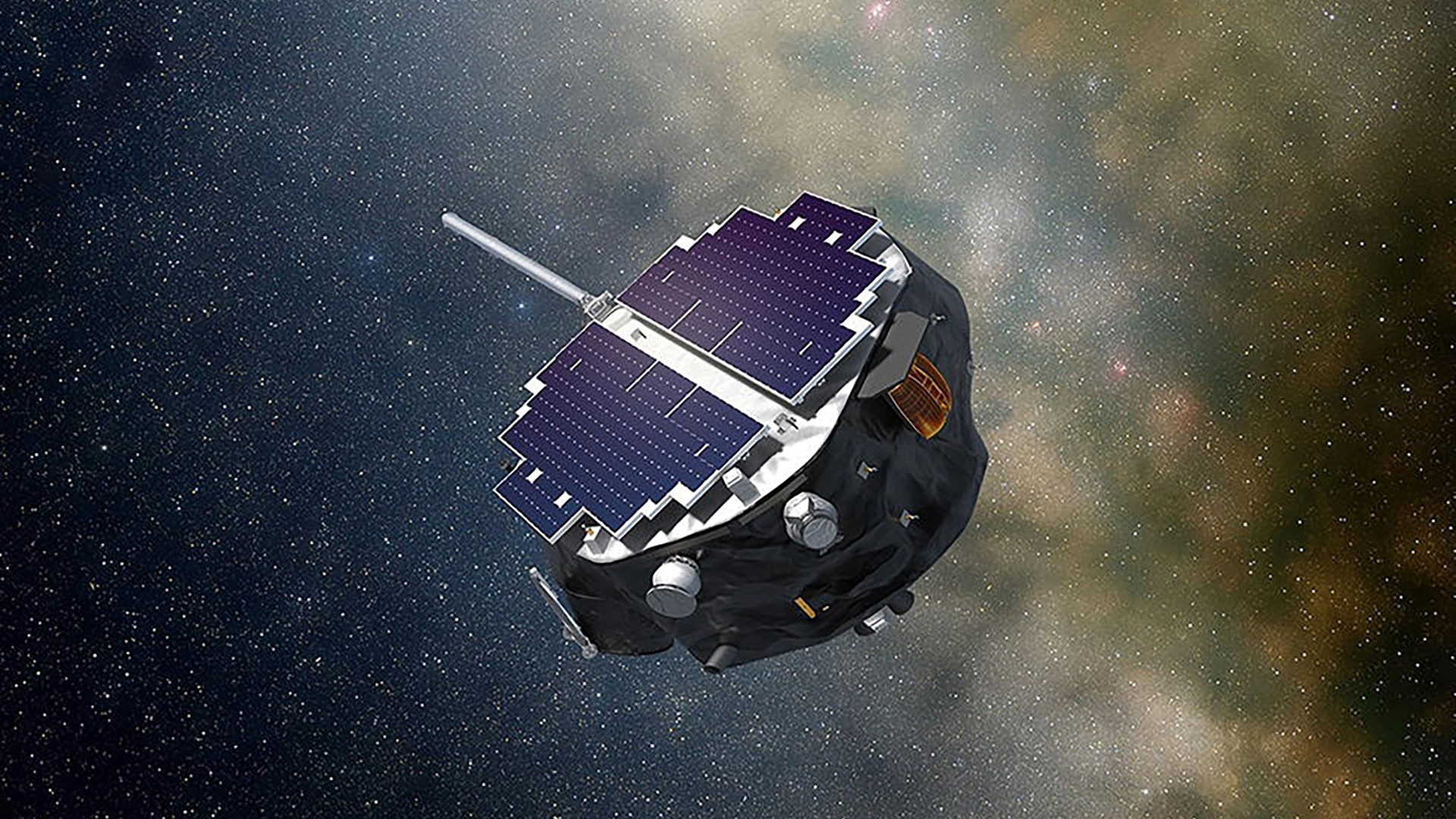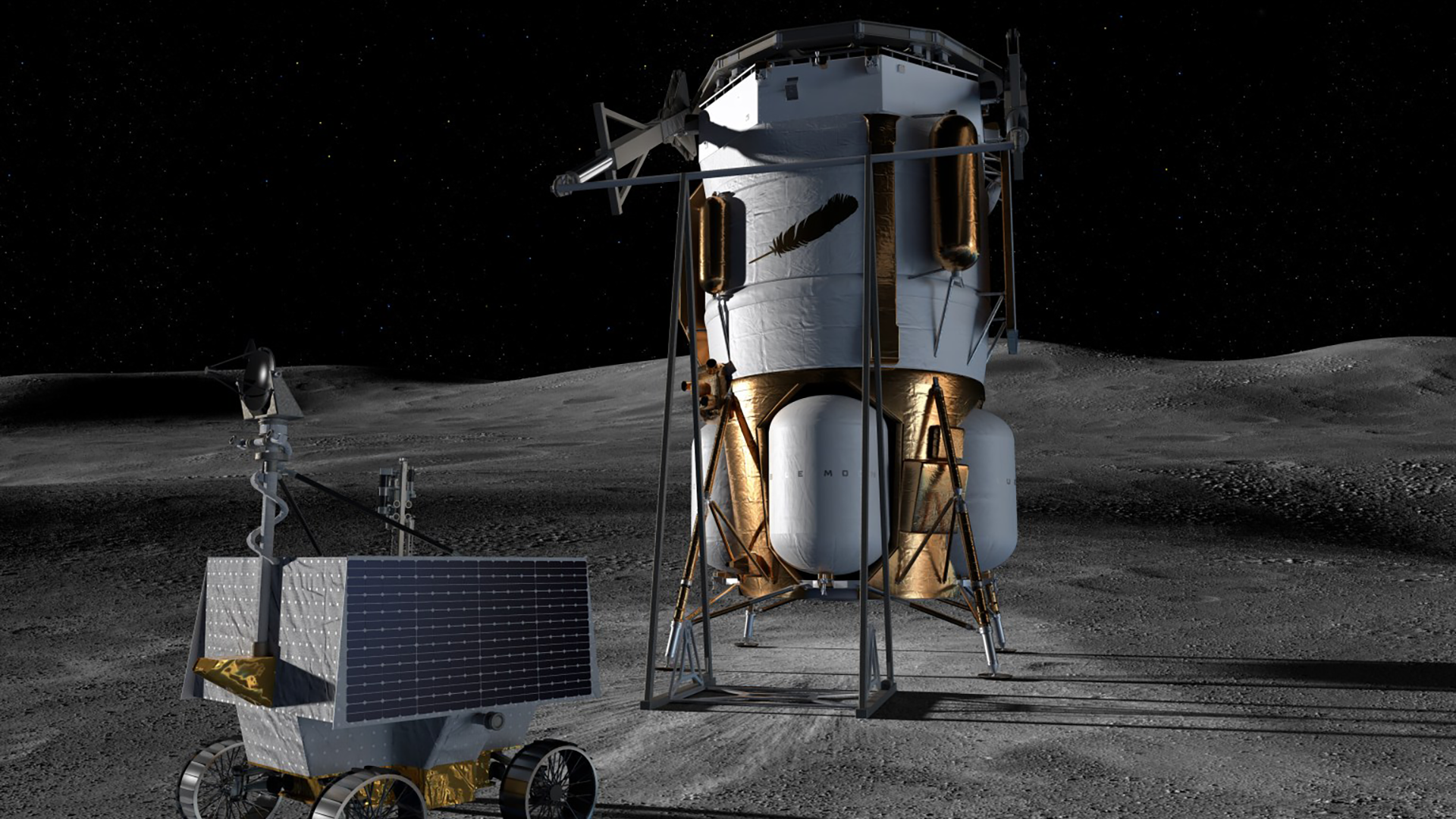
As part of the agency's Artemis campaign, NASA has awarded Blue Origin of Kent, Washington, a CLPS (Commercial Lunar Payload Services) task order with an option to deliver a rover to the Moon's South Pole region. NASA's VIPER (Volatiles Investigating Polar Exploration Rover) will search for volatile resources, such as ice, on the lunar surface and collect science data to support future exploration at the Moon and Mars.
"NASA is leading the world in exploring more of the Moon than ever before, and this delivery is just one of many ways we're leveraging U.S. industry to support a long-term American presence on the lunar surface," said acting NASA Administrator Sean Duffy. "Our rover will explore the extreme environment of the lunar South Pole, traveling to small, permanently shadowed regions to help inform future landing sites for our astronauts and better understand the Moon's environment – important insights for sustaining humans over longer missions, as America leads our future in space."
The CLPS task order has a total potential value of $190 million. This is the second CLPS lunar delivery awarded to Blue Origin. Their first delivery – using their Blue Moon Mark 1 (MK1) robotic lander – is targeted for launch later this year to deliver NASA's Stereo Cameras for Lunar-Plume Surface Studies and Laser Retroreflective Array payloads to the Moon's South Pole region.
With this new award, Blue Origin will deliver VIPER to the lunar surface in late 2027, using a second Blue Moon MK1 lander, which is in production. NASA previously canceled the VIPER project and has since explored alternative approaches to achieve the agency's goals of mapping potential off-planet resources, like water.
"NASA is committed to studying and exploring the Moon, including learning more about water on the lunar surface, to help determine how we can harness local resources for future human exploration," said Nicky Fox, associate administrator, Science Mission Directorate, NASA Headquarters in Washington. "We've been looking for creative, cost-effective approaches to accomplish these exploration goals. This private sector-developed landing capability enables this delivery and focuses our investments accordingly – supporting American leadership in space and ensuring our long-term exploration is robust and affordable."
The task order, called CS-7, has an award base to design the payload-specific accommodations and to demonstrate how Blue Origin's flight design will off-load the rover to the lunar surface. There is an option on the contract to deliver and safely deploy the rover to the Moon's surface. NASA will make the decision to exercise that option after the execution and review of the base task and of Blue Origin's first flight of the Blue Moon MK1 lander. This unique approach will reduce the agency's cost and technical risk. The rover has a targeted science window for its 100-day mission that requires a landing by late 2027.
Blue Origin is responsible for the complete landing mission architecture and will conduct design, analysis, and testing of a large lunar lander capable of safely delivering the lunar volatiles science rover to the Moon. Blue Origin also will handle end-to-end payload integration, planning and support, and post-landing payload deployment activities. NASA will conduct rover operations and science planning.
"The search for lunar volatiles plays a key role in NASA's exploration of the Moon, with important implications for both science and human missions under Artemis," said Joel Kearns, deputy associate administrator for exploration, Science Mission Directorate, NASA Headquarters. "This delivery could show us where ice is most likely to be found and easiest to access, as a future resource for humans. And by studying these sources of lunar water, we also gain valuable insight into the distribution and origin of volatiles across the solar system, helping us better understand the processes that have shaped our space environment and how our inner solar system has evolved."
Through CLPS, American companies continue to demonstrate leadership in commercial space advancing capabilities and accomplishing NASA's goal for a commercial lunar economy. NASA's Ames Research Center in California's Silicon Valley led the VIPER rover development and will lead its science investigations, and NASA's Johnson Space Center in Houston provided rover engineering development for Ames.
To learn more about CLPS and Artemis, visit https://www.nasa.gov/clps.
Last Updated: March 21, 2026